A website can be one of the strongest tools a business has, but only if it is built properly. Many businesses invest in a website without realizing that poor design choices, outdated content, and weak user experience can drive potential customers away.
Even if a business offers excellent products or services, a poorly designed website can hurt credibility and reduce conversions.
1. Slow Loading Speed
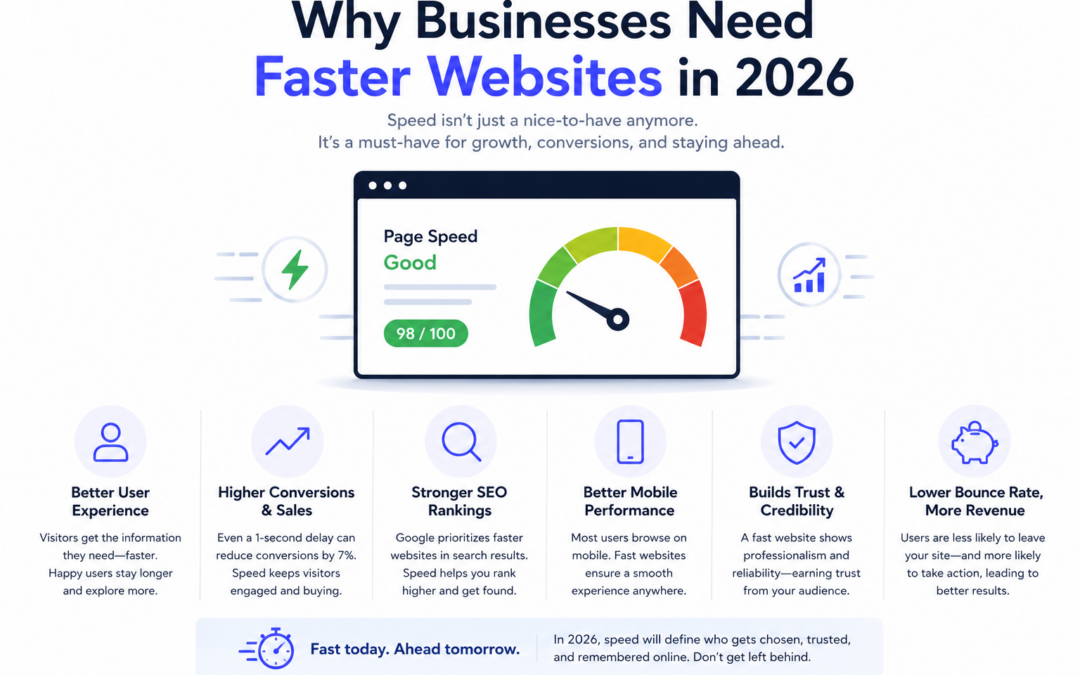
One of the most common mistakes businesses make is having a website that loads too slowly. Large images, poor hosting, excessive animations, and outdated coding can make pages take too long to open.
Most users will not wait more than a few seconds before leaving a slow website.
2. Poor Mobile Experience
Many businesses still focus only on how their website looks on desktop. However, most users now browse through their phones.
Common mobile issues include:
- Text that is too small
- Buttons that are hard to click
- Images that do not resize properly
- Menus that are difficult to navigate
- Slow mobile loading times
A website that is not optimized for mobile can lead to lost inquiries and sales.
3. Weak or Missing Calls-to-Action
A website should guide visitors toward a specific action. Many businesses make the mistake of presenting information without clearly telling users what to do next.
If there is no visible “Contact Us,” “Book a Consultation,” “Request a Quote,” or similar call-to-action, users may leave without taking the next step.
4. Outdated Design
An outdated website can make a business appear inactive or behind the times. Old layouts, poor image quality, cluttered pages, and inconsistent branding can affect how customers view the company.
A modern website should look clean, professional, and easy to navigate.
5. Too Much Information on One Page
Trying to put everything on one page can overwhelm visitors. Large blocks of text, too many images, and cluttered sections make it difficult for users to find what they need.
Businesses should focus on keeping content organized, readable, and easy to scan.
6. Missing Contact Information
A surprising number of business websites make it difficult for customers to contact them.
Important contact details should always be easy to find, including:
- Phone number
- Email address
- Physical location if applicable
- Contact form
- Social media links
If customers cannot quickly find a way to reach the business, they may move on to a competitor.
7. Ignoring SEO
Some businesses invest in a visually attractive website but forget about search engine optimization. Without SEO, the website may not appear in search results, making it harder for potential customers to discover the business.
Ignoring SEO means missing opportunities to generate organic traffic and leads.
8. Lack of Security
Using outdated plugins, weak passwords, and unsecured forms can make a website vulnerable to hacking and data breaches.
A secure website helps protect both the business and its customers.
Conclusion
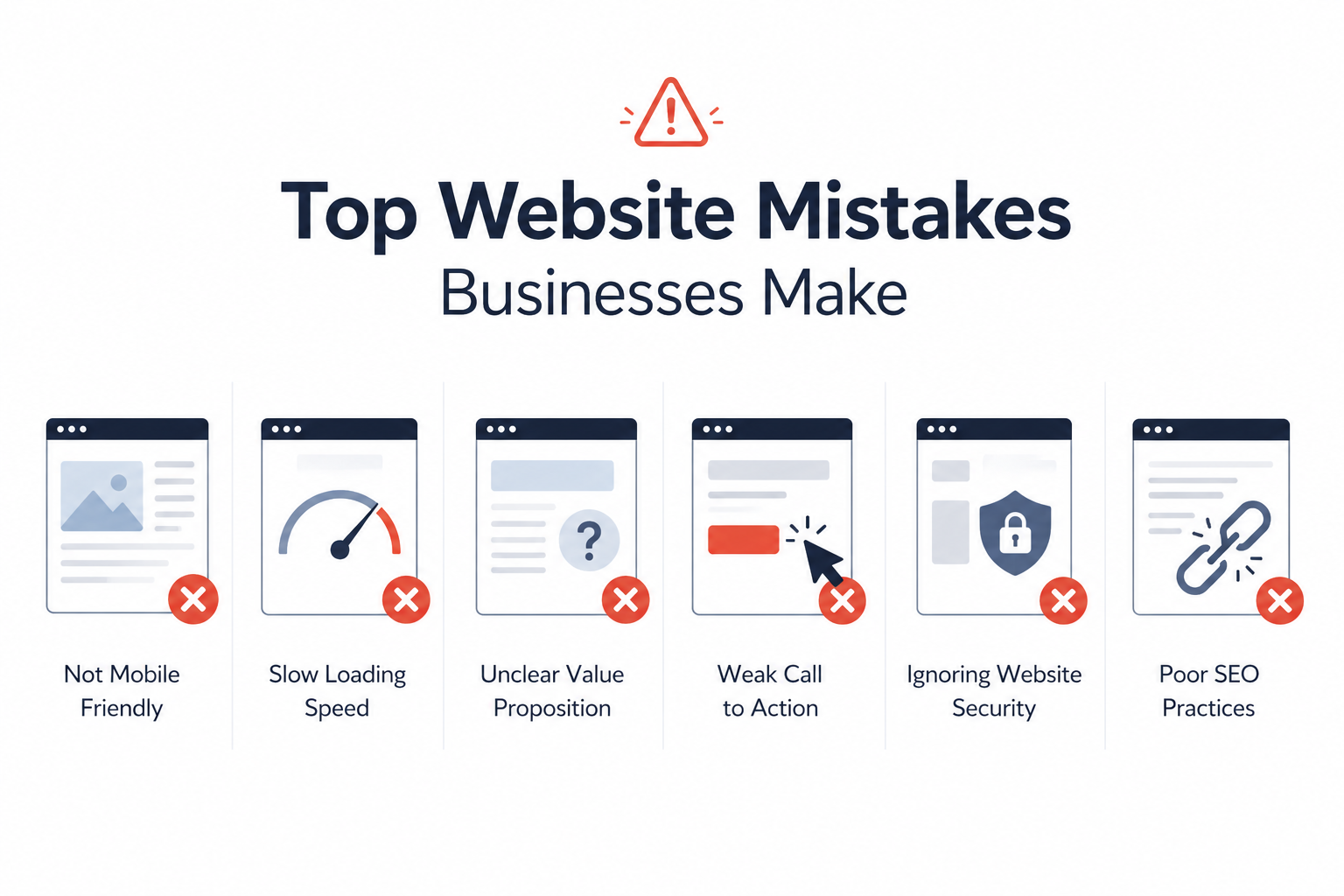
A business website should support growth, not create obstacles. Slow speed, poor mobile experience, missing calls-to-action, outdated design, and weak SEO are some of the biggest mistakes businesses make.
By identifying and fixing these issues, businesses can create a better user experience, build stronger credibility, and improve conversions.